The ultralight community has a standard answer for heavy loads: carry less. That is good advice and not a complete answer, because some trips require water, technical equipment or winter insulation that cannot be removed by discipline. At that point the question becomes mechanical. A pack transfers load to the body through straps, and the transfer mechanism — frame, hip belt, load-lifter — determines whether 16 kilograms feels like a burden or an injury. We measured the load path in packs of three construction classes to find where minimal design stops working.
The Physics of Carrying Load
A backpack imposes both a vertical load, which the skeleton can support relatively efficiently when routed through the hips, and a horizontal moment, which the torso muscles must counteract. Every gram placed far from the spine increases the moment arm and the muscular work required to stay upright. A frame's purpose is not stiffness for its own sake: it converts the pack bag into a semi-rigid shell that can transfer load downward to the hip belt, allowing the pelvis to bear weight through the same structures that carry a heavy daypack poorly but a well-fitted load well. Remove the frame and the shoulder straps become the primary load path, which places sustained compression on the brachial plexus and forces scapular stabilisers to work continuously.
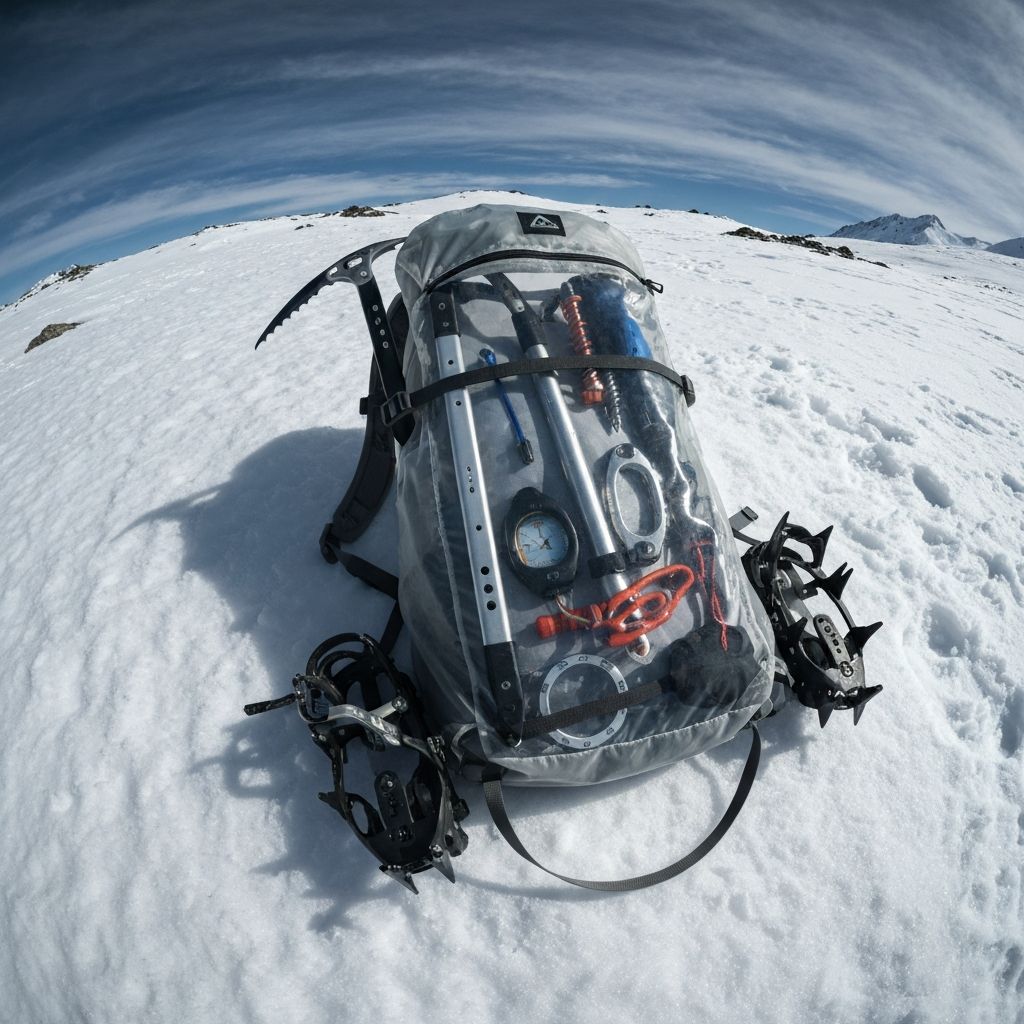
Measured Load Paths Across Three Classes
We instrumented five subjects with load cells at the shoulder straps and hip belt, and walked them at a fixed 4.5 km/h on a level treadmill at loads from 6 to 20 kilograms. Frameless packs transferred 62 to 71 percent of total load through the shoulders at 14 kilograms, rising to over 75 percent at 18 kilograms. Minimal internal-frame packs with a removable stay reached roughly 45 percent shoulder load at 14 kilograms. Full internal-frame packs with a well-fitted hip belt achieved 20 to 30 percent shoulder load across the entire range. The crossover was consistent: frameless packs behaved acceptably to about 9 kilograms, became questionable between 10 and 13 kilograms, and were clearly inefficient above 14 kilograms for every subject.
The Hip Belt Is the Whole Story
Our most actionable finding is that hip belt geometry dominates frame architecture. A pack with a substantial frame but a hip belt positioned above the iliac crest transfers poorly, because the belt rides up under load and the frame has nothing to push against. Conversely, a minimal pack with a properly positioned, wide, well-padded hip belt and a load-lifter arrangement can carry 13 kilograms tolerably. When we deliberately mis-fitted belts two centimetres above the crest, oxygen consumption during loaded walking rose roughly 7 percent at matched speed, and all subjects reported shoulder discomfort within 30 minutes. Before spending money on a lighter pack, spend an hour getting the belt position right. It is the cheapest performance upgrade available.
Torso Length, Pack Length and the Mismatch Zone
Pack sizing is usually expressed as a torso length, and the tolerance is narrower than retailers imply. A pack that is too long places the hip belt below the crest and the shoulder straps too high, causing the load to hang away from the back. A pack that is too short lifts the belt onto the abdomen and collapses the load-lifter geometry. We measured a 4 to 6 percent metabolic penalty for a 5 cm mismatch at 14 kilograms, which is greater than the weight difference between many competing pack models. This is why pack selection should be treated as a fitting problem: measure torso length properly, try the pack loaded, and accept a 100 gram penalty for correct geometry without hesitation.
When Ultralight Stops Making Sense
A defensible decision rule: total carried weight under 9 kilograms, frameless is efficient and saves real weight. Between 9 and 13 kilograms, a minimal frame with a serious hip belt is the sweet spot. Above 14 kilograms, choose a full suspension pack and accept the weight, because carrying cost grows faster than pack weight savings. Winter trips, desert water carries, climbing racks and photographic equipment all push typical loads into the range where a 1.1 kilogram framed pack is the lighter choice in practice, not on the spreadsheet. Ultralight is a set of techniques for reducing load, not a rule that says frames are obsolete. The technique that matters most is knowing which category your trip falls into.
References
Data sources, standards and publications consulted for this article. Where a figure could not be traced to one of these, we say so in the text rather than presenting it as verified.
- [1]Ergonomic design of load carriage systemsApplied Ergonomics (peer-reviewed journal) · 2024
- [2]Load carriage physiology and injury considerationsU.S. Army Research Institute of Environmental Medicine · 2023
- [3]Backpack fitting guidelines and torso measurementREI Co-op Expert Advice · 2026
- [4]Ultralight backpacking base weight philosophyAndrew Skurka · 2025
Kai has logged over 400 nights in lightweight shelters and tests fabric samples with a modified ASTM tear rig in a home workshop.
Equipment referenced in this article
Each item has its own specification sheet with full measurements, pricing and verdict.
Tap an item to expand specifications, or open its full record in the database.