New Zealand's Great Walks are the most systematically managed long-distance trails in the world, and the management is not incidental to the experience; it is the reason the experience is what it is. Huts rather than campsites on most routes, strict booking, and in some cases single-direction travel have kept the trails themselves in remarkable condition and eliminated the improvisation that produces both overcrowding and environmental damage elsewhere. The trade-off is that access has become a logistical project. Understanding the booking architecture is now the single largest determinant of whether a foreign visitor gets onto the walk they came for.
The Booking Architecture, Decoded
Great Walks bookings are released on a rolling schedule rather than a single annual date, with windows opening progressively by route and season. For the most contested routes, notably the Milford Track, demand at the opening minute is heavy enough that availability for peak dates disappears almost immediately. Practical consequence: a single-attempt strategy fails. Successful booking patterns we observed among walkers with high success rates involve preparing the booking form in advance, knowing exact hut sequence, accepting midweek dates, and attempting multiple release windows across several months. The system also requires walkers to book the full sequence of nights, so the route is walked as a fixed itinerary rather than a flexible one.
Why Huts Beat Tents on These Routes
New Zealand's approach of concentrating accommodation in serviced huts has three advantages over dispersed camping. First, environmental impact is concentrated on a small number of hardened sites rather than spread across a fragile landscape. Second, river crossings and weather events can be managed: hut wardens issue warnings and, in serious cases, hold walkers, which is only possible when you know where people are. Third, hut culture is itself part of the experience and part of the safety system, because information about conditions, route timings and hazards travels through a hut at night far more effectively than through any notice board. The cost is capacity, and capacity is now the fundamental constraint on these routes.
Weather and River Crossings: The Real Hazard
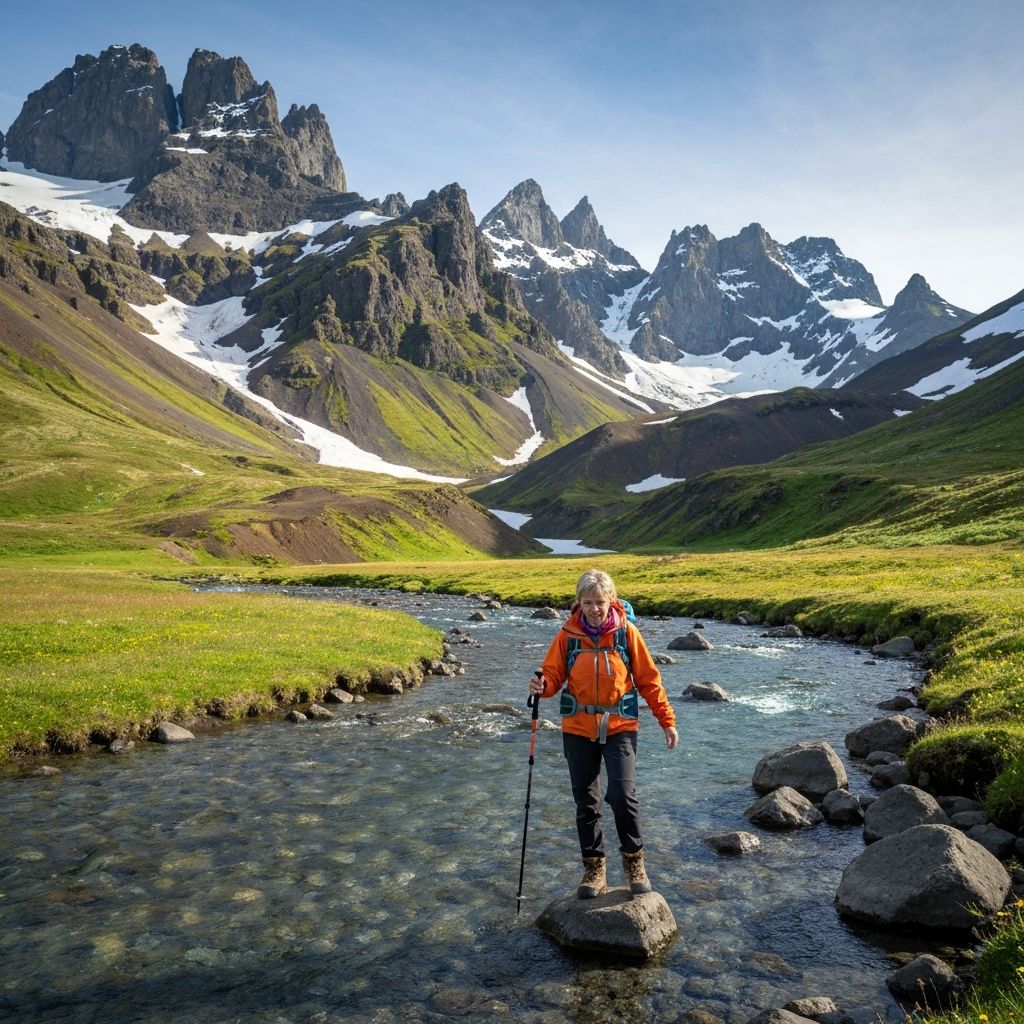
New Zealand's weather is the dominant risk factor on every Great Walk, and the mechanism is specific. Saturated catchments respond to rainfall within hours, and side streams that are ankle-deep at breakfast can become impassable by lunch. The Fiordland and Mount Aspiring routes see several metres of annual rainfall, and the correct behaviour is to treat the river crossing as the day's decision point rather than an item on a schedule. Walkers should be prepared to stop, wait or turn back, and should never enter discoloured or fast-moving water above knee height. The second hazard is exposure on open alpine sections where a warm valley forecast means very little at 1,200 metres in wind and rain.
Differential Pricing and the Conservation Contract
New Zealand applies higher hut fees to international visitors than to residents, a policy that is unusual among national park systems and explicitly tied to conservation funding. The rationale is straightforward: the conservation estate is funded by taxpayers, most of whom are residents, while a large share of the economic benefit accrues to the tourism sector. The policy is effective in generating revenue and remains politically contentious in some quarters. For visitors it makes the pricing predictable rather than exploitative: booking early mitigates price pressure less than for commercial lodges, but the fee structure is at least transparent and the revenue stays in the conservation system rather than a private operator's margin.
Building an Itinerary That Survives Contact With Reality
Plan the trip around the booking you can obtain, not the booking you want. Book flights only after confirming the walk, because reversing the order is how people end up paying for accommodation they cannot reach. Allow two buffer days at each end, since inter-island travel and weather delays are common. Choose one hard route and one easy one: the Abel Tasman or Rakiura Track can be booked with far more flexibility and provide a genuine alternative when the Milford sequence cannot be secured. Train for river crossings by practising the leg-brace technique before you travel, and carry a personal locator beacon, which is standard practice in New Zealand backcountry rather than an indication of excessive caution.
References
Data sources, standards and publications consulted for this article. Where a figure could not be traced to one of these, we say so in the text rather than presenting it as verified.
- [1]Great Walks booking, hut and campsite informationDepartment of Conservation (DOC), New Zealand · 2026
- [2]Climate data and rainfall recordsNational Institute of Water and Atmospheric Research (NIWA) · 2025
- [3]Weather warnings and forecasting servicesMetService New Zealand · 2026
- [4]Backcountry safety and river crossing guidanceNew Zealand Mountain Safety Council · 2025
Sarah reports on circular business models and has visited repair facilities across Europe, Japan and the United States.
Equipment referenced in this article
Each item has its own specification sheet with full measurements, pricing and verdict.
Tap an item to expand specifications, or open its full record in the database.