Norway's outdoor access law is the most permissive in Europe and, arguably, in the world: on uncultivated land you may walk, ski, camp and forage, with obligations rather than permissions as the organising principle. It is a legal culture built on the assumption that access and responsibility are inseparable, and it has worked for decades because visitor numbers were low and behaviour was self-policed. Jotunheimen, the country's most visited high mountain area, is now the stress test. Growth in the last decade has been steep and concentrated, and the question facing managers is whether a tradition of voluntary restraint can carry the load or whether the quiet regulations already embedded in the law need to be enforced more visibly.
What the Law Actually Says
The Outdoor Recreation Act permits travel on foot and on skis across uncultivated land year-round, and permits camping on uncultivated land for up to two nights in the same location without asking the landowner, provided you stay at least 150 metres from inhabited cabins and houses and observe basic care obligations. Longer stays require the landowner's consent. There are important refinements: cultivated land, including pasture in active use, is excluded; motorised access is heavily restricted; and open fires are prohibited in or near forest between mid-April and mid-September. The obligations are legally enforceable but rarely enforced, which is precisely the tension. The system assumes users understand the rules, and increasing visitor numbers mean increasing numbers who do not.
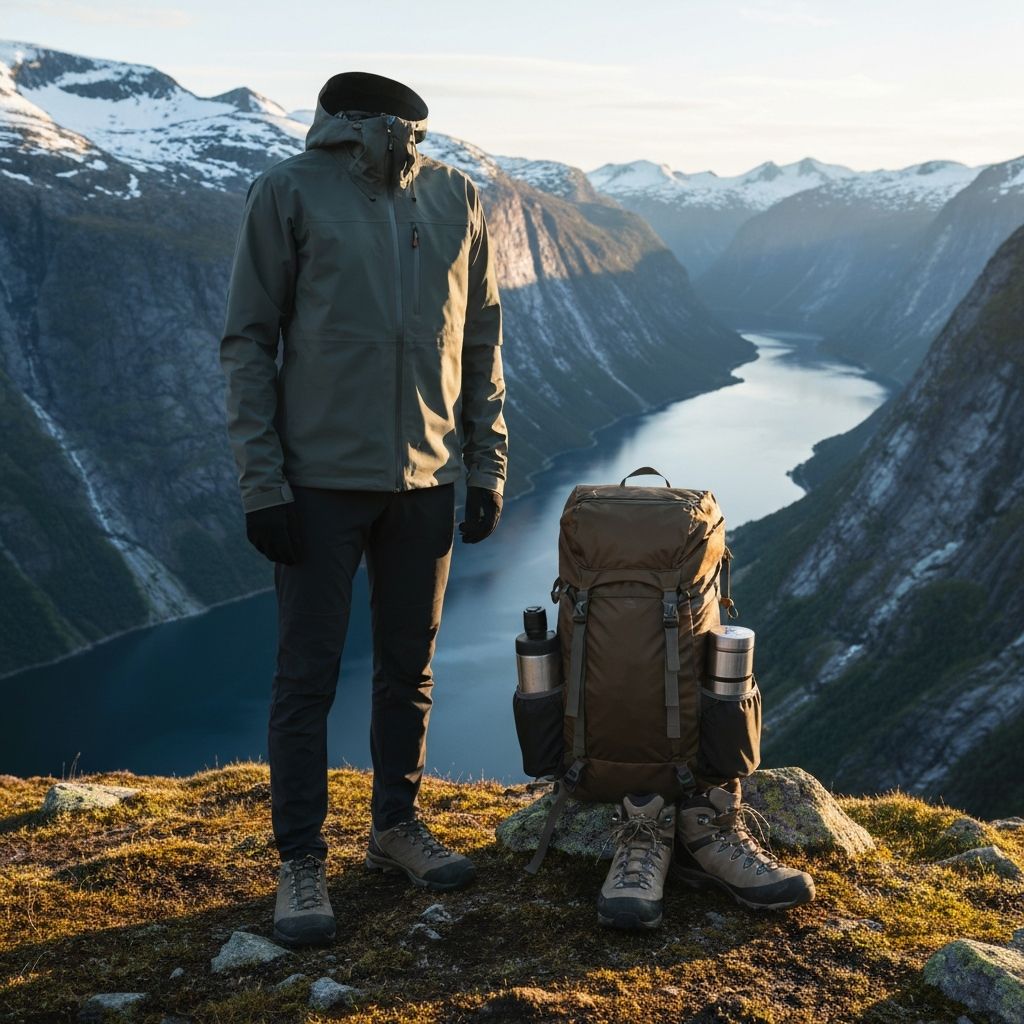
Where Growth Is Concentrated
Jotunheimen's pressure points are not the deep valleys. They are the accessible summits and the classic hut-to-hut connections: Galdhøpiggen and Glittertind via the easiest approaches, and the Besseggen ridge traverse, which is the single busiest mountain route in the country by a wide margin. Growth in overnight stays in Norwegian Trekking Association cabins has outpaced capacity for a decade, so more people camp, and camping concentrates near the same junctions where the infrastructure already exists. Our own observations along the most accessible corridors found widening of informal paths, braided treads on wet ground and vegetation loss in the immediate vicinity of the highest-use trailheads — small-scale impacts, but exactly the ones that compound.
Infrastructure Versus Abstraction
The Norwegian model relies on a specific kind of infrastructure to make freedom practical: maintained trails, bridges over serious water, marked routes, and a hut network that is dense enough to make a route plan credible. That infrastructure is not free and its funding model is strained. The Trekking Association maintains thousands of kilometres of marked route with a mix of membership fees, cabin revenue and volunteer labour. Where investment lags, informal use increases and the environmental cost lands on the terrain rather than on a budget line. The most useful discussion in Norway is not about restricting access but about funding the maintenance that makes unrestricted access sustainable — a far more tractable problem.
The Case for Light-Touch Regulation
Where formal measures have been introduced in Norway they have been surgical rather than systemic: parking management at overloaded trailheads, restrictions on specific sensitive sites, seasonal closures for bird cliffs and reindeer calving grounds. The pattern is instructive. Regulation is targeted at the small number of places where the environment cannot absorb the traffic, while the general principle stays intact. For visitors this means the rules you are most likely to encounter concern parking, payment for roads and facilities, and local restrictions around protected areas. It also means the personal obligation is heavier than in a fenced and permitted system: there is no ranger controlling your behaviour, so the terrain depends on your judgement.
How to Travel Here Without Being the Problem
Camp on durable ground well away from trails and water. Latitude is not an abstraction here: 60 degrees north means long grass and slow-growing vegetation that does not recover from a single season of trampling. Use existing fire rings or no fire at all, and understand that Norwegian open-land fire rules are seasonal and specific. Do not pitch within 150 metres of cabins or on actively grazed pasture, even if the field looks empty. Pack out all waste including food scraps, because decomposition in cold alpine conditions is extremely slow. And crucially, buy a Trekking Association membership before you go: it funds the maintained trails and bridges that allow you to travel freely, which makes it the most direct contribution you can make to keeping the access tradition intact.
References
Data sources, standards and publications consulted for this article. Where a figure could not be traced to one of these, we say so in the text rather than presenting it as verified.
- [1]Outdoor Recreation Act and guidance on access rightsNorwegian Environment Agency (Miljødirektoratet) · 2026
- [2]Protected area management for JotunheimenNorwegian Environment Agency · 2025
- [3]Cabin and trail data, membership statisticsNorwegian Trekking Association (DNT) · 2026
- [4]Statistics on outdoor recreation and visitor numbersStatistics Norway (SSB) · 2025
Sarah reports on circular business models and has visited repair facilities across Europe, Japan and the United States.
Equipment referenced in this article
Each item has its own specification sheet with full measurements, pricing and verdict.
Tap an item to expand specifications, or open its full record in the database.