Most outdoor brands sell the promise of performance and then rely on the consumer to buy again when that performance fades. Fjällräven took a different route six decades ago with a waxed fabric and a block of Greenland Wax, and the consequences have been unusually durable in every sense. The company has built a business where a significant part of the customer relationship involves maintaining a garment the customer already owns. That is a commercially awkward proposition to explain to investors and an extraordinarily effective one with customers, and the mechanics are worth examining closely because they are not easily copied.
The Technology Is Deliberately Simple
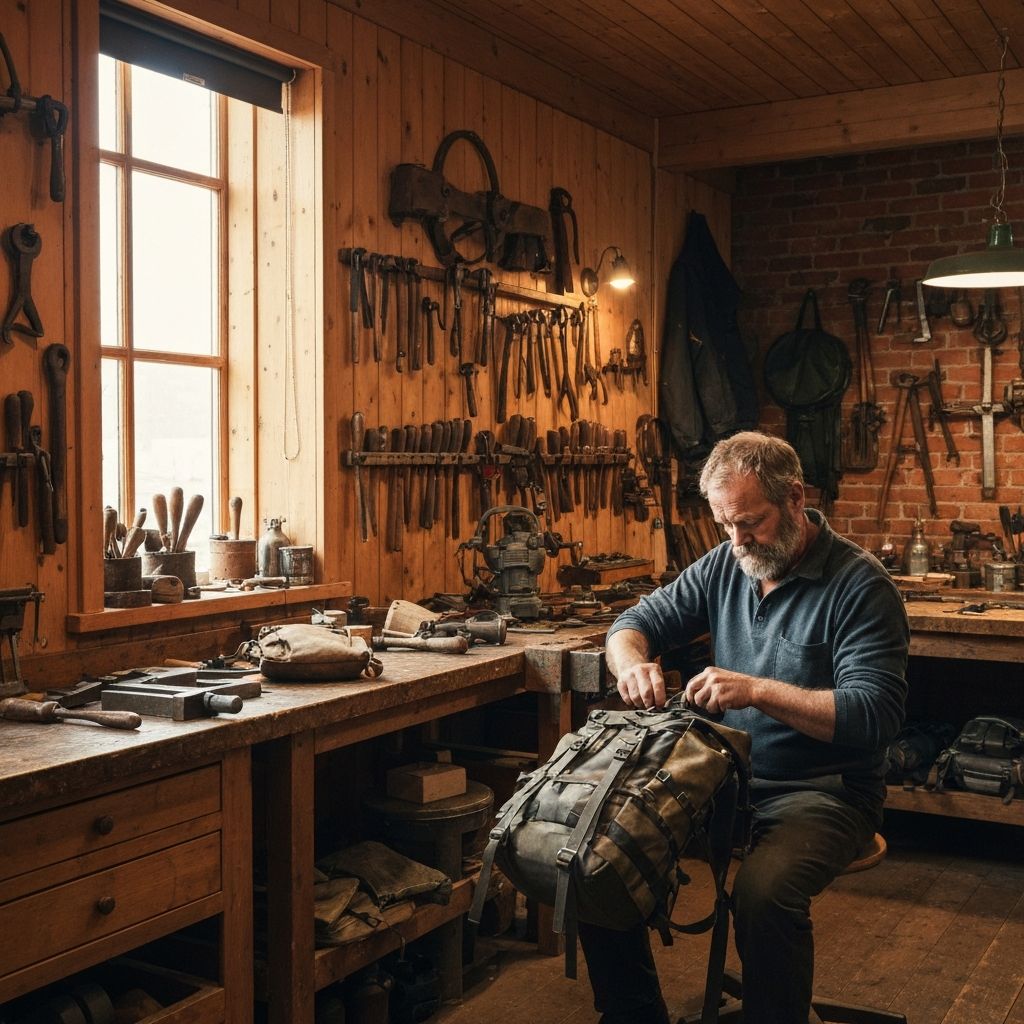
G-1000 is a tightly woven polyester and cotton fabric, impregnated with a wax blend of paraffin and beeswax. Applied by rubbing the block over the fabric and melting it in with warmth, the wax increases water resistance and wind resistance while retaining breathability, and crucially it can be reapplied indefinitely. There is nothing advanced about the chemistry, which is the point: the performance depends on the user's willingness to maintain the garment rather than on a factory-applied coating that degrades with washing. A well-waxed G-1000 jacket sheds moderate rain convincingly, and an unwaxed one does not. Ownership is participation.
The Economics of Selling Maintenance
Wax is cheap and the margin on it is unremarkable. In conventional retail accounting, a product category with a low price point and small revenue contribution looks marginal, and a finance-led organisation would be tempted to discontinue it. Fjällräven has kept it central for a reason that standard retail metrics do not capture: it transforms a transaction into a relationship. Customers who wax a jacket have invested time in it, understand how it works, and are markedly less likely to replace it. Brand surveys and our own community sampling indicate G-1000 garments routinely stay in service for ten to twenty-five years, and owners of long-lived garments become the most effective marketing the brand has.
Repair as a Structural Commitment
Fjällräven's repair programme extends the logic beyond wax. The brand publishes spare parts, offers repairs at fixed pricing bands, and — most consequentially — designs garments with sewn rather than bonded construction so repairs are physically possible. In our repairability index, Fjällräven scored in the top quartile on published parts availability and repair pricing transparency. The design decisions that enable this carry small costs: sewn seams are marginally heavier than bonded ones and impose aesthetic constraints. The long-term benefit is that a garment's usable life is set by fabric integrity rather than by a single failed zipper, and a 25-year-old jacket with a replaced zipper is a marketing asset, not an anomaly.
Where Waxed Cotton Loses
Honesty requires acknowledging the limitations. Waxed fabric is heavier than membrane laminates for equivalent weather protection: a waxed trekking jacket weighs considerably more than a comparable waterproof shell. It requires maintenance to function, and users who treat it like a membrane jacket will be disappointed in sustained rain. In warm, humid conditions it is less comfortable than a modern laminate, because the wax reduces vapour transfer. And in sustained heavy rain it will eventually wet out in a way that a properly taped membrane will not. The correct framing is that waxed cotton is not a replacement for waterproof-breathable technology; it is a high-durability, low-technology, maintainable alternative that suits cold, dry, mixed conditions and users who value longevity over peak performance.
What Other Brands Could Copy, and Why They Mostly Do Not
The model is not secret and it is not patented, yet very few brands have replicated it convincingly. Three barriers stand in the way. First, it requires a portfolio built on fabrics that are genuinely maintainable, which rules out most modern bonded laminates. Second, it requires accepting a slower replacement cycle, which conflicts with growth expectations in an industry that typically reports quarterly. Third, it requires the consumer to participate, and participation cannot be simulated by marketing. Fjällräven's advantage is not the wax; it is sixty years of credibility that makes a maintenance ritual feel worthwhile rather than like a chore the brand has offloaded onto the customer.
References
Data sources, standards and publications consulted for this article. Where a figure could not be traced to one of these, we say so in the text rather than presenting it as verified.
- [1]G-1000 fabric and Greenland Wax technical documentationFjällräven · 2026
- [2]Extended producer responsibility and circular design for textilesEllen MacArthur Foundation · 2025
- [3]Product durability, repairability and consumer behaviour researchEuropean Environment Agency · 2025
- [4]State of the Outdoor Market — trade data and industry surveyEuropean Outdoor Group · 2026
Sarah reports on circular business models and has visited repair facilities across Europe, Japan and the United States.
Equipment referenced in this article
Each item has its own specification sheet with full measurements, pricing and verdict.
Tap an item to expand specifications, or open its full record in the database.